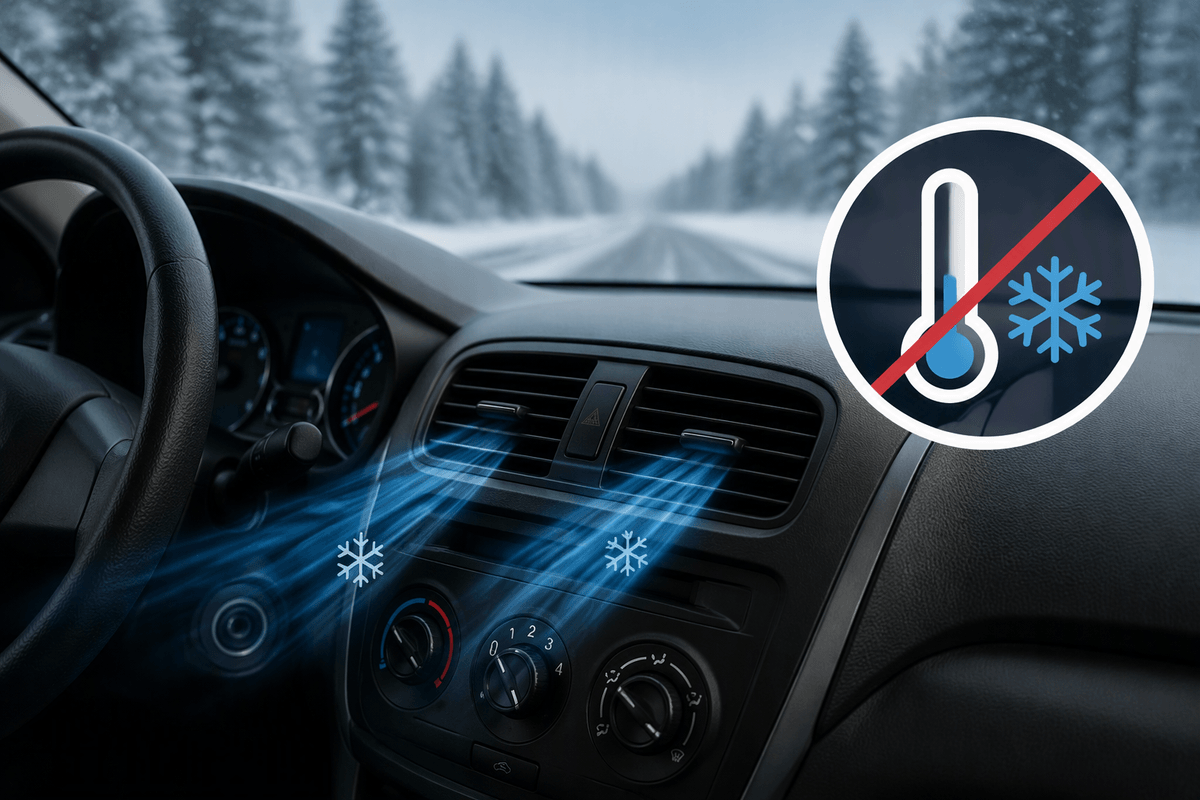
Cold air from the heater: what it usually means
If your heater is blowing cold air, it usually means one of two things: the engine isn’t getting hot enough yet, or hot coolant isn’t reaching the heater core (the small “radiator” that warms cabin air). On a normal day, you should feel at least lukewarm air within 5–10 minutes of driving, sooner if you’re not just idling. If it stays cold, common causes include low coolant, a stuck-open thermostat, air trapped in the cooling system, or a control issue like the temperature blend door not moving. Some fixes are simple, but ignoring it can lead to overheating later.
First, rule out the “stop driving” warning signs
You can keep troubleshooting a cold heater, but don’t keep driving if the car is showing signs of an engine-cooling problem. Pull over and shut the engine off if the temperature gauge is climbing into the red, an overheat warning light comes on, you see steam from under the hood, or you smell a strong sweet “hot coolant” odor. Also treat sudden loss of power, loud ticking/knocking, or coolant pouring onto the ground as a stop-now situation.
Cold air from the vents can happen when coolant is low, and low coolant can turn into overheating fast—sometimes within a single drive. If the gauge is normal and stable, you can usually continue with basic checks. If it’s running hot, don’t “limp it home”; towing is cheaper than an engine.
A quick refresher on how your heater actually gets hot
Most car heaters don’t “make” heat. They borrow it from the engine. As the engine warms up, the water pump circulates hot coolant through the engine and radiator, and a small branch of that flow goes through the heater core behind the dash. The blower fan pushes cabin air across the heater core, and that warmed air comes out your vents.
Two things have to happen for you to feel heat: the coolant has to get hot (the thermostat helps the engine warm up quickly by staying closed at first), and hot coolant has to actually flow through the heater core. If either step fails, you’ll get cold air—even with the fan on high. The tricky part is that some problems don’t show up until you’re driving, and access to the heater core and blend door can be time-consuming, so a few quick checks can save real money.
Easy cabin-side checks before opening the hood
Start with the simple stuff you can do from the driver’s seat. Set the temperature to full hot, put the mode on floor/defrost, and turn off A/C (on many cars the A/C can still run in defrost, but it shouldn’t prevent heat). If you have dual-zone climate control, set both sides to hot and make sure “SYNC” (if equipped) isn’t fighting you. Listen for changes behind the dash when you move the temp from cold to hot; a quiet click or faint whir is normal, but no sound and no change in airflow temperature can point to a stuck blend door or control issue.
Watch warm-up behavior. After 10–15 minutes of driving, the temperature gauge should rise to its normal spot and stay there. If it barely moves, you’ll often get weak or no heat, especially at highway speeds. Also note patterns: heat that shows up only while driving (but turns cold at idle) can hint at low coolant or air in the system—both worth checking before you assume it’s an expensive dash repair.
Coolant level and leaks: the most common real culprit
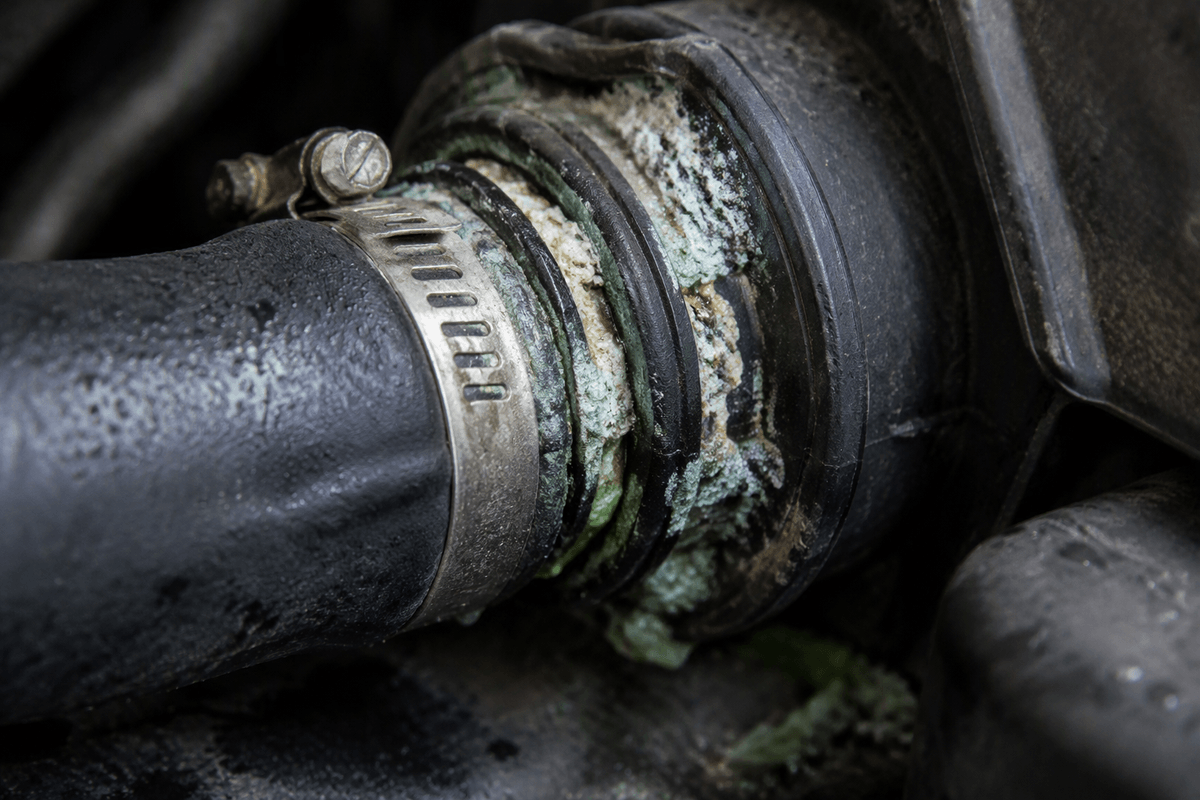
Heat that comes and goes, or disappears at idle, is often the cooling system telling you it’s low on coolant. The heater core sits high in many cars, so when the level drops, it can fill with air instead of hot coolant. You can have “enough” coolant to keep the temperature gauge looking normal on an easy drive, yet still not have enough flow to make cabin heat.
Check coolant only when the engine is fully cold. Use the translucent overflow bottle first: the level should be between MIN and MAX. If it’s empty or very low, don’t just top off and forget it—coolant doesn’t get “used up,” it leaks. Look for wet spots under the car, crusty white/green residue around hose connections, a damp radiator seam, or a sweet smell after parking. If you need to add coolant repeatedly, plan on a leak diagnosis soon; the cheap top-off can turn into an overheat fast.
Thermostat problems: when the engine never truly warms up
A thermostat that’s stuck open (or opening too soon) can keep the engine from ever reaching full operating temperature. The giveaway is warm-up behavior: after 10–15 minutes of normal driving, the temperature gauge barely climbs, or it rises a little and then drops when you’re cruising. Cabin heat will be weak, and it often gets colder the faster you drive because the radiator is constantly shedding heat.
You can also watch the upper radiator hose on a cold start: it should stay cool for several minutes, then quickly get hot when the thermostat opens. If it warms gradually almost right away, the thermostat may be stuck open. Driving like this usually won’t overheat the engine, but it can hurt fuel economy and cause poor defrost. Replacing a thermostat is sometimes straightforward, but on some cars it’s buried and can turn into a labor-heavy job.
Heater core, blend door, or air in the system? Use simple tests
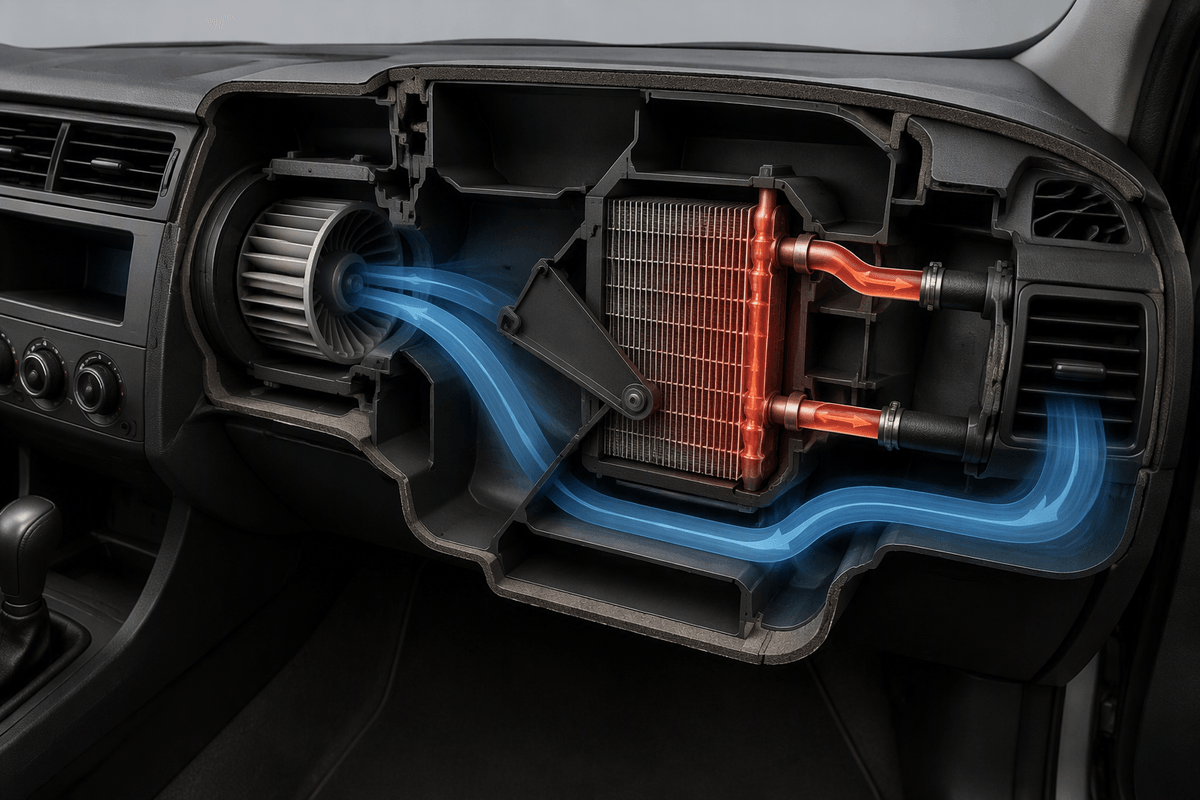
If the engine is at normal temperature and the coolant level is correct, separate “no heat” into flow, air, or a door problem. With the engine fully warm and the heater set to full hot, carefully feel the two heater hoses at the firewall (hot parts can burn). If one hose is hot and the other is much cooler, coolant isn’t moving through the heater core—often a partially clogged core or a flow control valve issue. If both hoses are hot but the air from the vents stays cold, suspect the temperature blend door or its actuator (the door isn’t directing air through the hot core).
Air trapped in the cooling system can mimic either problem: you’ll get heat that comes and goes, gurgling behind the dash, or heat that improves when you rev the engine. The practical catch is bleeding air isn’t “one size fits all.” Many cars need a specific bleed screw, funnel, or fill procedure, and getting it wrong can cause overheating, so stop if the temperature gauge starts to climb.
Decide your next move: DIY, mechanic, and preventing a repeat
If the temperature gauge stays normal and you found low coolant, topping up with the correct coolant mix can restore heat, but only temporarily unless you find the leak. If you suspect air in the system, follow the exact bleed/fill procedure for your car; doing it wrong can introduce more air or cause overheating. A thermostat is a reasonable DIY on many cars, but access varies and a bad seal can create a new leak.
Book a mechanic if the coolant keeps dropping, you see coolant inside the cabin, the heater hoses suggest a clogged heater core, or the vents stay cold even when both heater hoses are hot (blend door/actuator). To prevent a repeat, fix leaks promptly, use the right coolant type, and keep the overflow bottle at the proper level—not “topped to the brim.”